
Decoding the Odds: How House Advantage Works
The Truth About Beating Casino Games: Odds You Should Know
Casino gambling is the act of wagering money or valuables on games of chance or skill, such as slots, blackjack, or roulette, where the outcome determines a win or loss. Its core value lies in the thrill of risk and reward, turning a simple bet into an electrifying experience where every spin or hand could bring a payout. You play by placing chips on a table or inserting cash into a machine, then rely on luck or strategy to beat the house odds for potential cash prizes. This direct, high-stakes action offers a form of entertainment that lets you test your nerve and walk away with winnings.
Decoding the Odds: How House Advantage Works
Decoding the odds means understanding that the house advantage is a built-in mathematical edge, not a temporary streak. Every game has a calculated percentage—like 5.26% on American roulette’s double-zero—ensuring the casino profits over time, regardless of short-term wins. This edge arises from payout ratios that are less than true odds; for example, a winning bet on a single number pays 35-to-1, despite real odds of 37-to-1. To mitigate this, focus on games with the lowest house advantage, such as blackjack with basic strategy (roughly 0.5%) or baccarat’s banker bet (around 1.06%). Q: “How does the house advantage affect my bankroll?” A: It slowly erodes your funds over extended play, making session limits your only reliable defense against the math.
The Mathematics Behind Every Wager
Every wager in casino gambling is dictated by a fixed mathematical expectation, known as the house edge, which is built directly into the game’s rules. This edge ensures that, over countless trials, the casino retains a statistically guaranteed percentage of all money bet, independent of short-term player wins. Probabilistic payout ratios—like the 35:1 on a single roulette number versus its true 37:1 odds—are the primary mechanism for this advantage. The mathematics guarantee a negative expected value for the player on every single spin or hand. Understanding this core structure reveals that no strategy can overcome the built-in long-term loss.
The mathematics behind every wager prove that the house edge is an inescapable, predictable probability designed into the rules of the game.
Why the House Always Wins in the Long Run
The casino’s long-term profitability isn’t luck; it’s a mathematical certainty baked into every game’s structure. The house edge operates as a statistical tax on every wager, ensuring that over thousands of bets, the casino’s expected return is always positive. Individual players can win in the short term due to variance, but the law of large numbers guarantees that the casino’s cumulative profit converges toward a fixed percentage of total money wagered. This means even a player on a hot streak is simply experiencing a temporary deviation from inevitable regression to the mean. No system or strategy can overcome this built-in advantage; every spin, hand, or roll is independent and designed to pay out less than true odds.
The house always wins because the odds are mathematically rigged in its favor over time, making short-term wins irrelevant to its guaranteed long-term profit.
Comparing Edge Percentages Across Table Games and Slots
When you compare edge percentages across table games and slots, the difference is stark. Blackjack with basic strategy often sits below a 1% house edge, while European roulette hovers around 2.7%. Slots, however, typically run from 5% to 15% or higher, making them far less forgiving. This means comparing edge percentages across table games and slots directly impacts your bankroll’s lifespan. A low-edge table game lets you play longer with less risk, while a slot’s higher edge drains funds faster, even with flashy jackpots.
Comparing edge percentages across table games and slots reveals that table games generally offer much lower house edges than slots, directly affecting your chances of staying in the game.
Mastering Bankroll Discipline at the Tables
Mastering bankroll discipline at the tables begins with pre-session allocation, where you set aside a specific loss limit you can walk away from. Treat this stake as non-negotiable; once it’s gone, you must stop playing. A core practice is betting only 1-5% of your total bankroll per hand or spin, which prevents rapid depletion and sustains your play through natural variance. Bankroll management also requires you to physically isolate your gambling funds from daily cash, avoiding the temptation to dip into rent or food money. When a session turns cold, exercise emotional control at the table by leaving the pit immediately rather than chasing losses with larger bets. This discipline ensures you live to play another day, turning gambling from a financial risk into a structured, repeatable experience.
Setting Loss Limits Before You Play
Setting loss limits before you play is a fundamental pillar of bankroll discipline, defining the absolute maximum you are willing to lose in a single session. Once this predetermined amount is gone, you must walk away immediately without exception. This hard stop on session losses prevents emotional chasing and protects your overall gambling bankroll for future visits. Calculate your limit based on a percentage of your total bankroll, not on a desire to recoup past losses. Adhering strictly to this number transforms gambling from a frantic spiral into a controlled, budgeted activity where the primary goal is session survival, not immediate profit.

The Betting Unit System for Sustainable Play
The Betting Unit System hinges on deciding a fixed, small percentage of your bankroll—like 1% to 2%—as your standard wager. This keeps each bet low enough to survive losing streaks without panic. When your bankroll dips, your betting unit shrinks proportionally, and it rises only as your funds grow. You never chase losses or bet big to win big; every hand or spin is a calm, predictable action. This makes your play sustainable, turning gambling into a marathon rather than a sprint. Unit-based betting discipline is the core habit that protects your bankroll from sudden ruin.
Knowing When to Walk Away from a Hot Streak
The most disciplined gambler knows a hot streak is a temporary spike in variance, not a license to abandon limits. Walk away from a hot streak by locking in your profit once you have hit your predetermined session win goal—often 20-30% of your buy-in. Do not increase bet sizes because winning feels “easy”; this shifts risk-to-reward against you. Instead, follow a clear cash-out sequence:
- Decide your win target before sitting down.
- Stop playing the moment you reach it, even if the table feels charmed.
- Physically pocket your chips and leave the casino floor immediately.
The illusion of an unstoppable run is the trap that turns short-term gains into long-term losses.
Exploring Game-Specific Strategies for Better Returns
Exploring game-specific strategies for better returns in casino gambling involves tailoring your approach to the mathematical edge of each game. For blackjack, basic strategy and card counting can reduce the house edge below 0.5%, while in video poker, perfect play on a 9/6 Jacks or Better machine offers a theoretical return of 99.5%. In baccarat, exclusively betting on the banker (1.06% house edge) is superior to the player or tie bets. Craps players focus on pass and come bets with odds to minimize the house advantage. Q: How does a side bet like “Insurance” affect blackjack returns? A: It increases the house edge by over 7%, making it a losing long-term proposition. In roulette, European single-zero wheels (2.7% edge) are strictly better than American double-zero versions (5.26% edge). Slot strategies are limited to choosing high RTP percentages (>96%) and avoiding progressive jackpots that reduce base payouts.
Blackjack: Basic Strategy and Card Counting Fundamentals
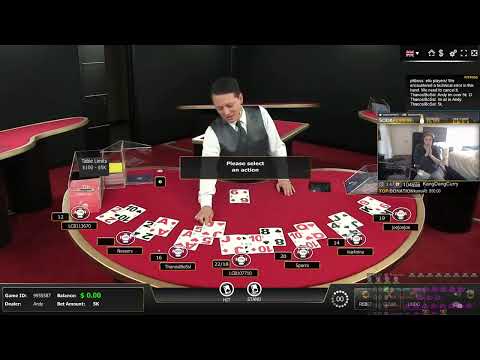
In blackjack, basic strategy and card counting fundamentals directly reduce the house edge by dictating optimal play for every hand. Basic strategy, derived from probability, specifies when to hit, stand, split, or double down based on your total versus the dealer’s upcard, cutting the casino advantage to under 0.5%. Card counting fundamentals then track the ratio of high to low cards remaining in the deck, allowing a player to raise bets when the count favors them, theoretically shifting the edge to the player’s favor.
- Memorize a basic strategy chart for the specific rule set at your table.
- Use the Hi-Lo count: assign values of +1 for low cards (2–6), 0 for mid-cards (7–9), and -1 for high cards (10–Ace).
- Maintain a “running count,” then convert to a “true count” by dividing by decks remaining.
- Only increase bets significantly when the true count is +2 or higher.
Roulette: Inside vs. Outside Bets and Their Payouts
When you play roulette, deciding between inside and outside bets is all about risk versus reward. Outside bets like red/black or odd/even cover nearly half the wheel, paying 1:1 but giving you a solid chance to stretch your bankroll. Inside bets, such as a straight-up number, offer a hefty 35:1 payout but are much harder to hit. For a balanced approach, consider combining both: use outside bets to protect your stack while sprinkling a chip on a lucky number for a thrill. Understanding roulette payout structures helps you pick a strategy that matches your comfort with volatility.
| Bet Type | Coverage on Wheel | Payout |
|---|---|---|
| Outside (e.g., red/black) | ~48.6% (European) | 1:1 |
| Inside (e.g., straight-up) | ~2.7% (European) | 35:1 |
Video Poker: Optimal Hold Strategies for Jacks or Better
In Jacks or Better, optimal hold strategies hinge on prioritizing high pairs and suited high cards over low pair draws. A single high card (Jack or higher) should always be held, but never keep a kicker like a low card alongside it. The strongest play is holding any high pair (Jacks through Aces), as it guarantees a paying hand. Conversely, always break a low pair (2s through 10s) if you hold four cards to a flush or straight flush draw. Never hold a lone low card.
- Always hold a high pair over a four-card inside straight draw.
- Hold four cards to a flush over a low pair.
- Discard a single high card if you hold three cards to a royal flush.
Craps: Pass Line Odds and Avoiding Sucker Bets
When you’re at the craps table, the smartest move is to stick with the Pass Line Odds bet. It’s one of the few wagers in the casino with true odds, meaning the house edge vanishes entirely once you put money behind your initial Pass Line bet. Avoid sucker bets like the “Any 7” or the “Hardways” that look tempting but carry a brutal house edge of 10% or more. Remember, the little bets are often the biggest traps for your bankroll. Keep your action simple—just the Pass Line and maximum odds allowed—and you’ll minimize losses while enjoying the game’s best shot at a fair return.
Psychological Traps That Derail Smart Play
The floor hums with loss, yet you feed another chip into the machine. This is the sunk cost fallacy—a psychological trap that derails smart play by convincing you that quitting now wastes all the money already lost. At the blackjack table, a string of bad hands triggers the gambler’s fallacy: you bet bigger, falsely believing a win is “due” after five losses. The dealer watches as you chase, not logic, but a story of redemption. Meanwhile, the near-miss on a slot reel triggers dopamine, tricking your brain into thinking skill was close to winning. These traps aren’t about strategy; they hijack your memory and hope, turning a calculated visit into a depleting spiral.
The Gambler’s Fallacy and Chasing Losses
The Gambler’s Fallacy tricks you into believing a slot machine is “due” for a win after a long losing streak, but each spin is independent with fixed odds. This illusion directly fuels chasing losses, where you increase bets to recover money, mistakenly thinking past outcomes affect future results. In reality, this behavior accelerates losses rather than reversing them, trapping you in a cycle of frustration. Recognize the fallacy for what it is—a mental shortcut that ignores probability—and set strict loss limits before you play. Stopping after a loss preserves your bankroll; doubling down only deepens the hole.
How Near-Misses Activate Reward Pathways
When you hit a near-miss in casino gambling—like two sevens with the third just one space off—your brain’s reward system lights up nearly as much as an actual win. This happens because dopamine floods the striatum, creating a feeling of “almost there” that tricks you into thinking a win is imminent. The brain interprets the near-miss as a learning signal, encouraging you to play more despite the loss. This reward pathway hijacking keeps you chasing the next spin, even when logic says to walk away.
- Near-misses trigger a dopamine release similar to winning, reinforcing the behavior.
- They create a false sense of skill, making you believe you can control the outcome.
- The brain’s striatum processes these events as a step closer to a win rather than a loss.
Emotional Regulation During Losing Sessions
Losing sessions trigger a physiological stress response that impairs decision-making. To counteract this, you must enforce a pre-committed loss limit before play begins. When that threshold is reached, the only correct emotional regulation tactic is immediate departure. Do not analyze “almost wins” or increase bets to recoup losses; these are the core of tilt behavior. A logical sequence for maintaining composure includes:
- Recognize physical signs of frustration, like increased heart rate.
- Perform a brief mental reset by stepping away for sixty seconds.
- If the urge to chase persists, accept the session as emotionally compromised and leave the casino floor.
This prevents maladaptive coping from derailing your bankroll strategy with impulsive action.
Land-Based Venues vs. Digital Platforms
The core distinction between land-based venues and digital platforms in casino gambling lies in the sensory and social engagement. Land-based venues offer an irreplaceable, tangible atmosphere where the physical clatter of chips, dealer interaction, and ambient noise create a high-stakes, immersive environment that can heighten emotional involvement. In contrast, digital platforms provide unmatched convenience and speed, allowing you to play multiple tables simultaneously from any location. A key practical consideration is the pace of play: digital platforms accelerate decision-making dramatically, which can erode your bankroll faster than the deliberate rhythm of a brick-and-mortar casino floor.
For bankroll management, the friction of traveling to a land-based venue inherently slows your gambling frequency, while the instant, 24/7 access of digital platforms requires rigid, self-imposed session limits.
Your choice should therefore match your need for atmospheric control versus rapid accessibility.
Atmosphere and Social Dynamics in Physical Halls
In physical halls, the immersive sensory interplay of ringing slot machines, murmuring crowds, and clacking chips directly amplifies risk-taking behavior. You feed off the tension at a craps table, where strangers collectively cheer or groan, creating a palpable social momentum that digital interfaces cannot replicate. Eye contact and dealer interactions add layers of psychological pressure, turning solitary wagers into shared emotional experiences. This gritty, high-stakes fellowship transforms a gamble into a live performance, where your choices are observed and validated by those around you.
Atmosphere and Social Dynamics in Physical Halls thrive on real-time, collective energy—converting isolated bets into a tangible, high-pressure social spectacle.
Speed of Play and Distractions in Online Environments
Online platforms accelerate game pacing distractions by eliminating physical waiting times, such as dealer shuffles or travel between tables. Instant spins and autoplay features pull you into rapid, repeated decisions, while pop-ups and chat notifications fracture focus. Unlike a land-based venue where environmental cues like chips clacking or a dealer’s pace naturally slow play, the digital environment bombards your attention, making it easier to lose track of time or wager limits. This compressed decision window can lead to impulsive bets, as the gap between action and outcome shrinks drastically.
In online gambling, speed of play and ambient distractions combine to create a high-velocity, low-friction experience that bypasses natural breakpoints found in physical casinos, demanding heightened self-awareness to maintain control.
Bonuses, Loyalty Programs, and Free Play Offerings
In land-based venues, bonuses are rare, though players might receive a comped meal or hotel stay based on play volume. Loyalty programs rely on carded play to tier up for perks like room upgrades or event access. Free play offerings are typically limited to sign-up coupons or mailer chips, often with playthrough requirements. Digital platforms contrast sharply by offering match deposit bonuses and daily free spins directly. Their loyalty programs award points redeemable for cash, while no-deposit free play is common. How do land-based free play offerings compare to digital ones? Land-based offers are usually physical, time-limited, and require travel, whereas digital free play is instant, more frequent, and tied to wagering conditions.
Legal Landscape and Responsible Participation
The legal landscape for casino gambling dictates where you can legally participate, varying by jurisdiction, and requires you to verify the operator’s licensed status before wagering. Responsible participation means setting strict personal limits on time and money, as the house always holds a statistical edge. Self-exclusion programs are legally mandated tools in regulated markets to help you block your own access if gambling becomes harmful. Treating gambling as paid entertainment rather than a way to make money is essential, as laws do not protect you from financial loss. Understanding these legal boundaries and practicing self-restraint are the foundations of safe engagement.
Age Restrictions and Licensing Requirements Across Jurisdictions
Before you place any bet, verifying the minimum legal gambling age is non-negotiable. This age threshold fluctuates wildly, from 18 in jurisdictions like the UK to 21 in most U.S. states, including New Jersey and Nevada. Licensing requirements are just as critical; a valid local license ensures the platform is legally bound to enforce these age restrictions. Playing on an unlicensed site bypasses these safeguards, leaving you vulnerable. Your first actionable step is always to confirm both the site’s license and your jurisdiction’s specific age law to ensure your participation is both legal and protected.
Recognizing the Signs of Problematic Behavior
Recognizing the signs of problematic behavior begins with tracking time and money spent, as consistent overshoot of both budgets indicates loss of control. Key indicators include chasing losses by increasing bets, lying about gambling sessions, or borrowing money to fund play. Emotional cues, such as irritability when not gambling or using casinos to escape stress, are critical red flags. Self-assessment tools like behavioral checklists can help identify these patterns early. The preoccupation with planning next visits—over work or relationships—often marks the shift from recreation to compulsion.

| Behavioral Sign | Practical Indicator |
|---|---|
| Chasing losses | Doubling bets to recoup prior losses in one session |
| Secretive activity | Hiding login receipts or bank statements |
| Neglecting obligations | Missing deadlines or events due to prolonged play |
Tools for Self-Exclusion and Time Management
To maintain control, casinos offer self-exclusion and time management tools that empower you to set firm boundaries. Self-exclusion programs allow you to voluntarily ban yourself from all physical or digital gambling platforms for a set period, making access impossible. For time management, implement this sequence:
- Activate session timers to receive a mandatory warning when your playtime hits a preset limit.
- Set daily deposit caps to prevent spending beyond a predetermined budget.
- Use reality checks that pop up at regular intervals, showing your total time and money wagered.
- Enable cool-off periods to lock your account for 24 hours after any extended session.
These tools give you direct authority to stop gambling before it escalates.
Maximizing Comp Value Without Overspending
To maximize comp value without overspending, focus your play on a single casino’s loyalty program to concentrate your points, rather than splitting action across multiple properties. Choose games with the lowest house edge you enjoy, such as video poker or baccarat, as these yield a higher theoretical loss per hour—and thus better comps—for the same actual spend. Always present your players card before any session, and bet the table minimum when rating is based on average wager. Casinos often reward frequency over bet size, so shorter, more regular visits can inflate your comp rate without increasing your bankroll risk. Avoid chasing status through slot play alone, where volatility can quickly erode your funds; instead, track your offers and politely request upfront comps based on your theoretical, not actual, losses.
Understanding How Comps Are Calculated by The House
The house calculates comps based on a theoretical loss formula, not your actual spending. Casinos track the average bet, hours played, and the game’s house edge to assign a theoretical drop. For slots, this uses coin-in multiplied by a set hold percentage; for table games, it factors in your bets per hour and the specific game’s odds. Your comp value is typically 10–40% of that theoretical loss. To maximize value without overspending, focus on tempo:
- Bet the minimum to stay rated, but increase play time to raise the theoretical number.
- Use your player’s card every session so casinous.com your average bet is recorded accurately.
- Choose games with lower house edges to stretch your bankroll, keeping the theoretical drop stable.
Strategic Play to Earn Free Rooms and Meals
Strategic play to earn free rooms and meals hinges on targeted casino play that maximizes your player rating without excessive loss. Focus your gambling on a single casino’s loyalty program, using a player’s card for every wager to ensure your average bet and hours of play are tracked. Choose low-house-edge games like video poker or blackjack to extend your session and increase your theoretical loss, which determines comps. Always ask a host about specific comp thresholds, and avoid chasing losses, as erratic play resets your value.
- Play only rated machines or tables with your player’s card inserted every session.
- Concentrate bets during regular hours to build average bet, avoiding peak times with less attention.
- Negotiate comps at the player’s desk only after meeting minimum play requirements.
- Time your play to align with special promotions that award bonus comp points for stays or dining.
Pitfalls of Playing Beyond Your Means for Perks
Chasing higher player tiers or comps by playing beyond your budget creates a dangerous cycle. The immediate loss from overspending almost always outweighs the value of any earned perks. A comped meal or hotel room is meaningless if it costs you a month’s rent in chase. This behavior leads to chasing losses to justify perks, where you continue gambling to validate the initial overspend. Ultimately, you lose control of your session limits for rewards that have fixed cash value.
- Financial stress from debt incurred trying to reach the next tier level.
- Compensating by gambling longer or at higher stakes than intended.
- Ignoring personal loss limits in pursuit of a cruise or show tickets.
- Experiencing reduced enjoyment of perks due to guilt over money lost.